
- Your cart is empty
- Continue shopping
-
KN
- Posted on
- Categories:Blog
- 0 comments
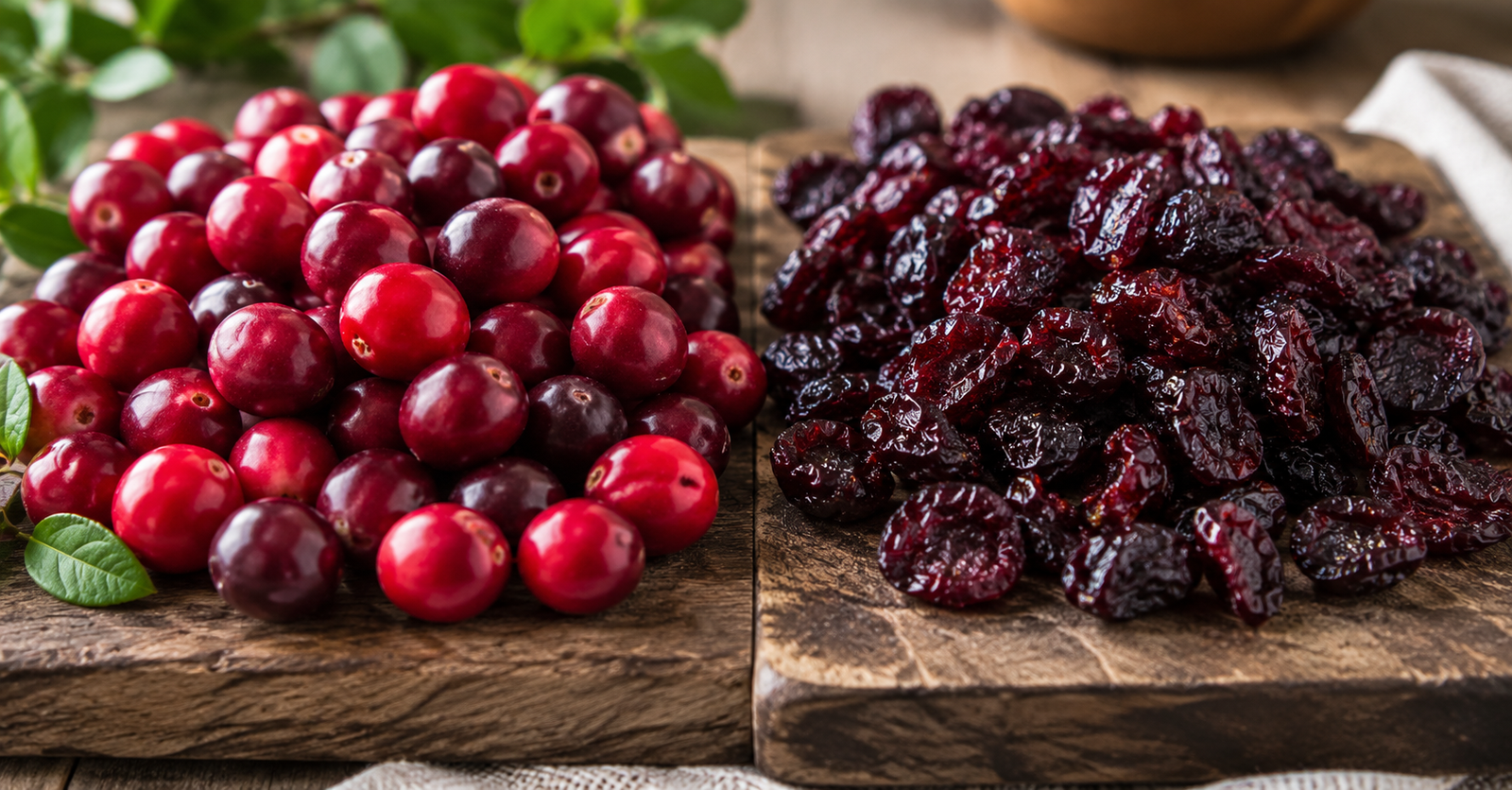
Cranberries are one of the most talked-about “superfoods” for immunity, urinary tract health, and antioxidants, but fresh cranberries are hard to find in most Indian cities and have a very short season. This leaves most people wondering: are dried cranberries just as healthy as fresh ones, or are you losing most of the benefits when they’re dried?
Here’s a clear, honest nutrition comparison so you know exactly what you’re getting.
Why This Comparison Confuses People
Fresh cranberries are naturally tart, low in sugar, and packed with water content. Dried cranberries, on the other hand, are usually sweetened during processing to balance out the tartness which is where most of the confusion (and some legitimate nutrition trade-offs) comes from.
The two aren’t a simple “fresh is always better” story. Each has a different nutritional profile depending on what you’re looking for.
Dried Cranberries vs. Fresh Cranberries: Nutrition Comparison (Per 100g)
| Nutrient | Fresh Cranberries | Dried Cranberries (sweetened) |
|---|---|---|
| Calories | ~46 kcal | ~325 kcal |
| Sugar | ~4g (natural) | ~65g (natural) |
| Fiber | ~4.6g | ~5.7g |
| Vitamin C | High | Reduced (heat-sensitive) |
| Antioxidants | Very high | Moderately high (some loss) |
| Water content | ~87% | ~15% |
| Shelf life | Days to 2 weeks | 6-12 months |
The most important thing to notice here: Dried cranberries are far more calorie- and sugar-dense per 100 g, simply because removing the water concentrates everything including natural sugars and most commercial dried cranberries also have added sugar during processing.
What You Actually Lose (and Keep) When Cranberries Are Dried
Vitamin C: Reduced vitamin C is sensitive to heat, so the drying process does reduce it compared to fresh cranberries. This is the biggest nutritional trade-off.
Fiber: Retained (even slightly concentrated) Fiber isn’t heat-sensitive in the same way, so dried cranberries actually have a comparable or slightly higher fiber content per 100 g simply because of water removal.
Antioxidants: Mostly retained cranberries’ well-known antioxidant compounds (proanthocyanidins, the same ones linked to urinary tract health) are fairly heat-stable, so dried cranberries retain a meaningful amount of their antioxidant profile, though not 100%.
Sugar: Significantly increased This is the real catch. Most commercially dried cranberries are sweetened with added sugar or fruit juice concentrate to offset their natural tartness once dried, which is why sugar content jumps so much higher than fresh.
Which One Should You Actually Choose?
Choose fresh cranberries if:
- You have access to them (seasonal, usually Oct–Dec) and want maximum vitamin C
- You’re cooking them into sauces, chutneys, or juices where their natural tartness works well
- You’re watching sugar intake closely
Choose dried cranberries if:
- Fresh isn’t available where you live (true for most of India, most of the year)
- You want a shelf-stable snack you can carry, add to trail mix, or use in baking
- You check the label and pick unsweetened or lightly sweetened dried cranberries—this single choice makes the biggest nutritional difference
A Practical Tip Most People Miss
The gap between “healthy dried cranberries” and “candy disguised as fruit” almost entirely comes down to added sugar. When buying dried cranberries, always check whether they’re:
- Unsweetened / naturally dried-closer to whole fruit nutrition, more tart
- Sweetened with cane sugar or juice concentrate-significantly higher sugar, more dessert-like
If you’re using dried cranberries for a health-focused reason (immunity, snacking, or urinary health support), unsweetened or lightly sweetened varieties are the better long-term choice, even if they’re slightly more tart.
Frequently Asked Questions
Are dried cranberries as healthy as fresh cranberries? Dried cranberries retain most of the fiber and a meaningful portion of the antioxidants found in fresh cranberries, but they lose some vitamin C and typically contain significantly more sugar due to the drying and sweetening process.
Do dried cranberries have added sugar? Most commercially available dried cranberries are sweetened with cane sugar or fruit juice concentrate to balance their natural tartness after drying. Unsweetened varieties are available and are the healthier choice.
Can I substitute dried cranberries for fresh in recipes? Yes, though dried cranberries are sweeter and more concentrated in flavor, so you may want to use a slightly smaller quantity and adjust any added sugar in the recipe accordingly.
How should dried cranberries be stored? Store them in an airtight container in a cool, dry place away from direct sunlight. Properly stored, dried cranberries stay fresh for 6-12 months
